RISC-V assembly interpreter, compilers, emulator and processor
· 0 min read

Author
CHYN, derived from the Hindi word चयन (chayan), meaning 'to select' or 'curate', is a cloud-based platform designed to make curated travel more accessible. Utilizing advanced Machine Learning (ML) technologies, CHYN fills significant gaps in the oversaturated travel market, focusing on providing a highly personalized and accessible daily travel experience.
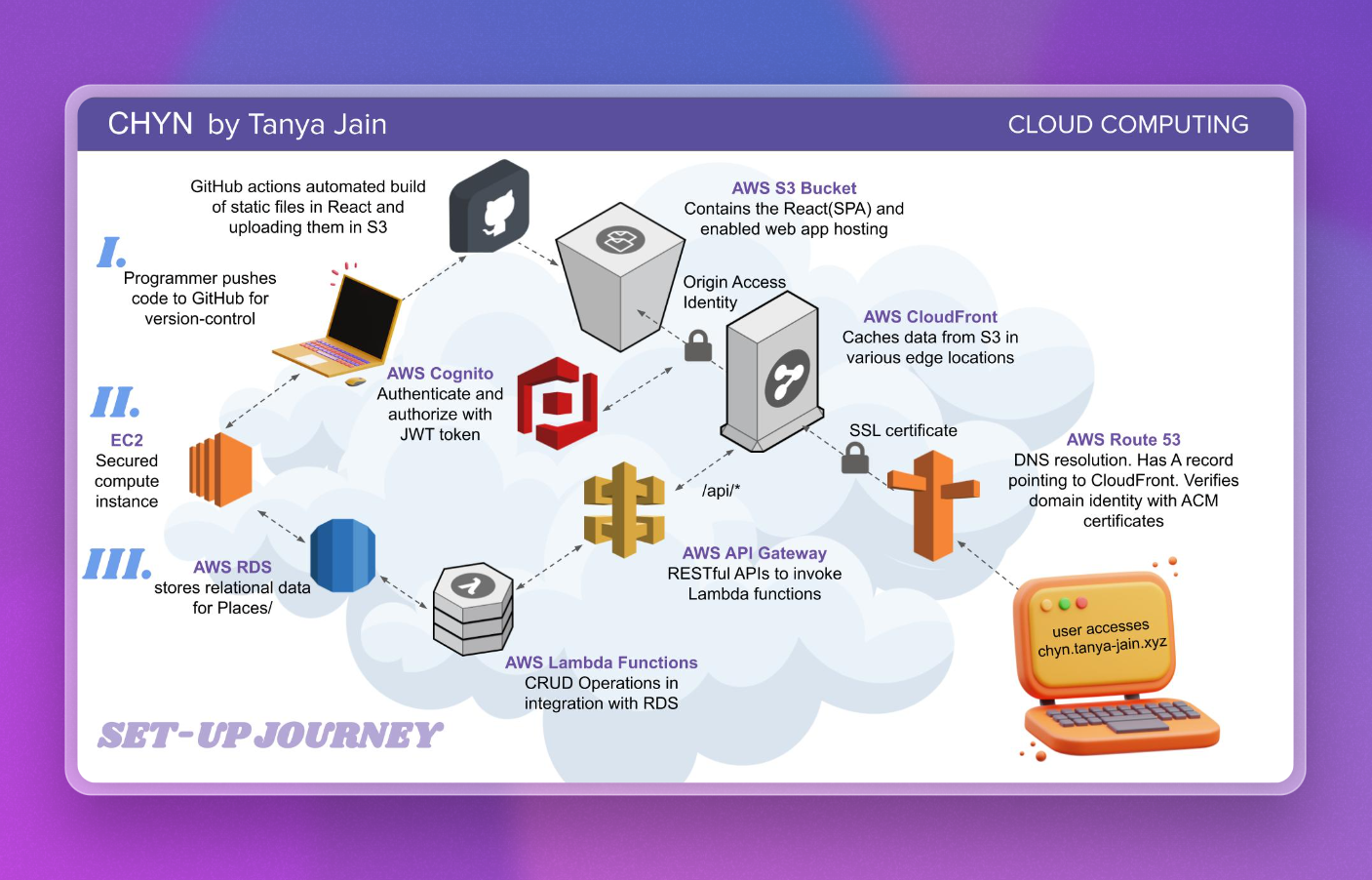
The project was inspired by the need to streamline the curated travel experience, making it more accessible and tailored through the use of cutting-edge ML technologies. CHYN aims to simplify the process of travel planning by automating the curation based on individual preferences and insights derived from vast amounts of travel data.
CHYN leverages a robust cloud-based architecture to deliver its services:

CHYN significantly impacts the travel industry by providing a platform that not only simplifies the travel planning process but also enhances the accessibility and personalization of travel experiences. It addresses key challenges in curated travel, such as the need for personalized recommendations and the ability to seamlessly integrate travel insights and preferences.
CHYN has successfully demonstrated how a range of AWS services can be integrated to build a comprehensive cloud-based solution for the travel industry. The project underscores the importance of security in cloud deployments and highlights the potential for cloud technologies to significantly enhance user experiences in web applications.
This project explores groundbreaking advancements in vehicle collision prediction algorithms using convolutional neural networks (CNNs). Highly recognized among the top 20% of submissions at the ICDAM international conference, our research presents a comprehensive analysis of 108 CNN configurations, significantly enhancing autonomous vehicle safety by innovatively addressing real-world complexities.
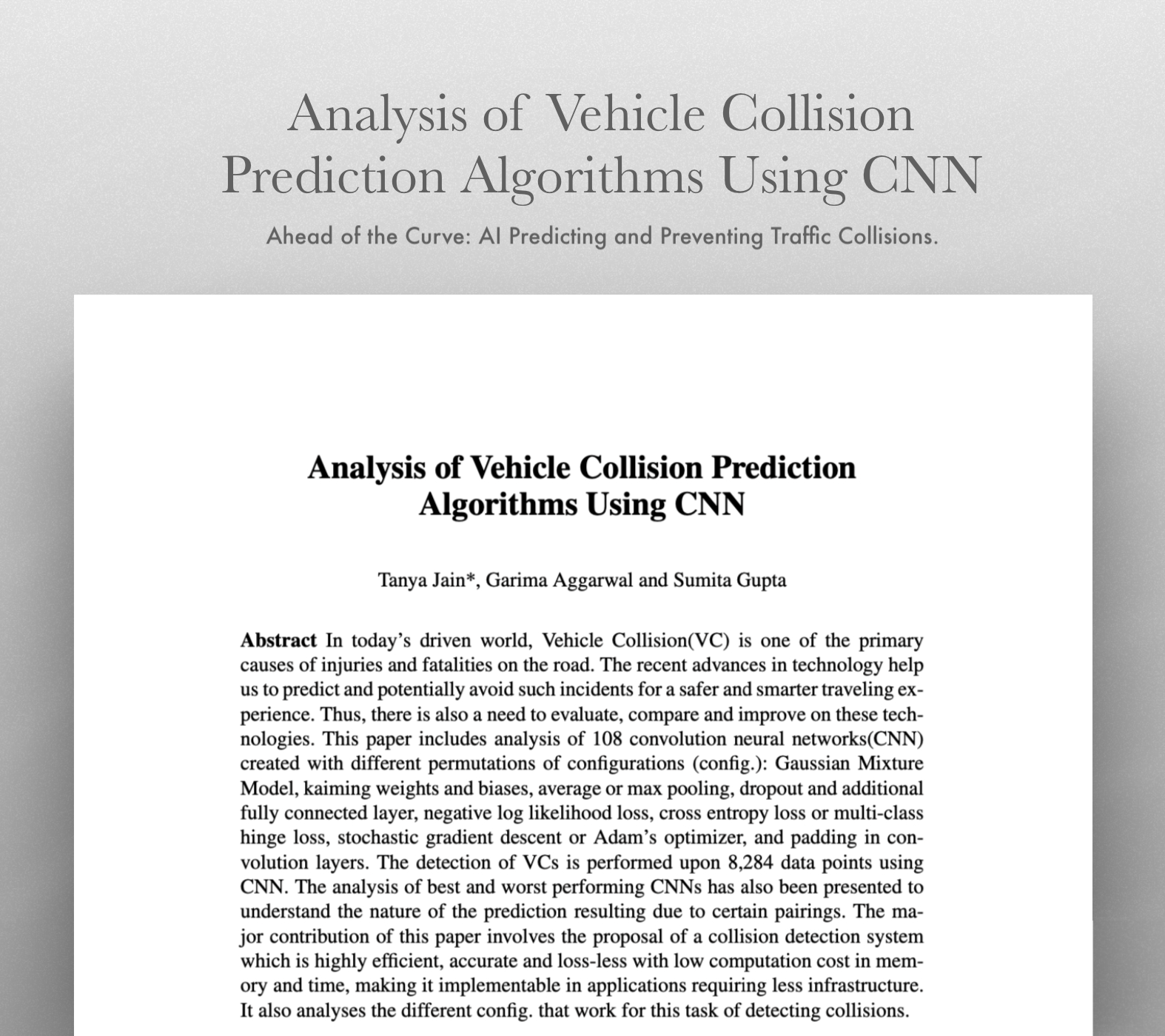
Create a system that predicts vehicle collisions with high accuracy andminimal computational resources. This system aims to improve the reliability and responsiveness of autonomous vehicles in real-world conditions, ultimately enhancing road safety.
Assess various CNN configurations on performance metrics such as accuracy, precision, recall, and F1-score. The goal is to identify optimal configurations that ensure the best balance between performance and computational efficiency, facilitating widespread adoption in the automotive industry.
The study involved creating and analyzing a substantial dataset of 8,284 data points and detailing the performance of various CNN configurations, examining aspects like accuracy, precision, recall, and F1-score. The detailed comparative analysis of various configurations -- including different layers, activation functions, optimizers, and loss functions, provides valuable insights into which combinations of techniques and optimizations yield the best results.
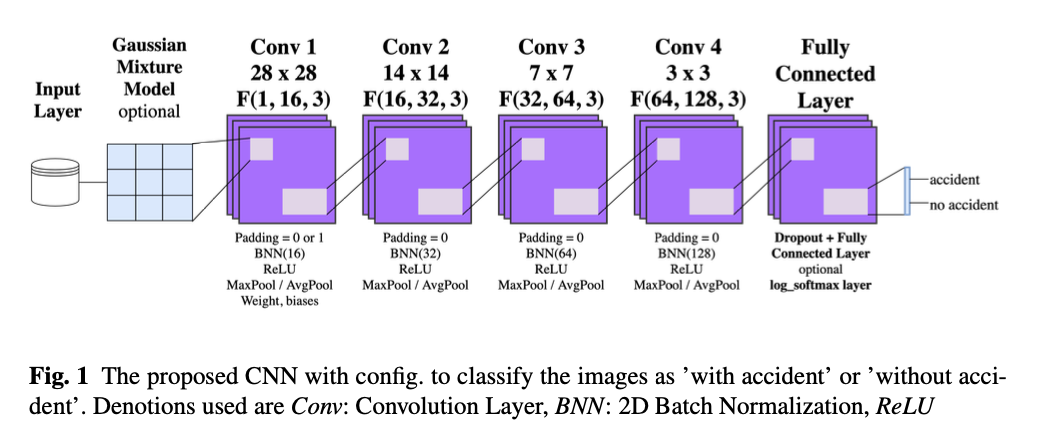
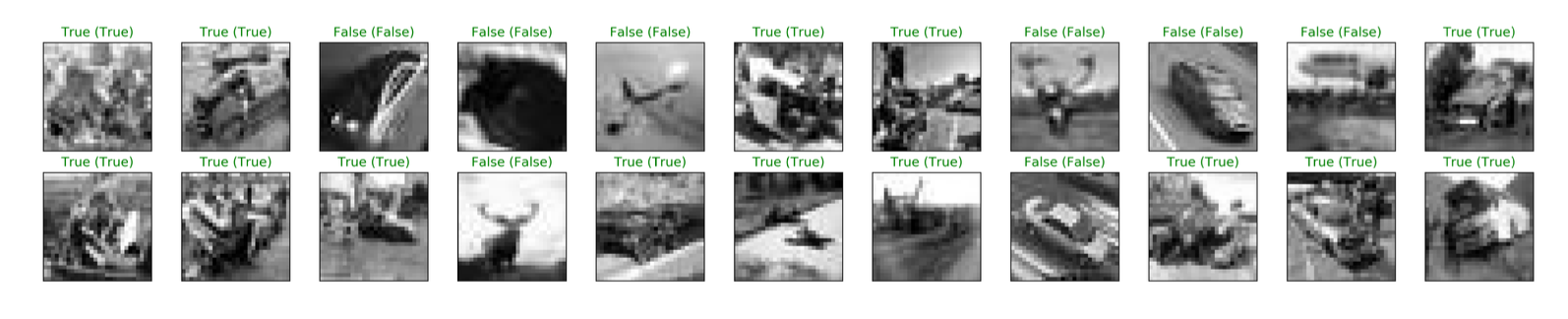
The top-performing CNN configuration achieved 100% accuracy along with perfect precision, recall, and F1-score, demonstrating its capability to reliably predict vehicle collisions in complex environments.
This high accuracy, coupled with low computational demands, marks a significant step forward in making advanced autonomous driving technologies more practical and accessible.
Significant challenges arose from the restricted availability and variability of real-world collision data, which is crucial for training predictive models.
Object prediction in autonomous driving typically benefits from the recognizable and consistent structures of objects like cars and humans. However, collision scenarios often partially or completely deform these structures, complicating the prediction process. This deformation disrupts the basic geometric and visual cues that are essential for accurate recognition, presenting a unique and significant challenge for collision prediction systems.
Achieving high accuracy in collision prediction while maintaining computational efficiency was paramount, given the real-time operational needs of autonomous vehicles. This balance is crucial for the practical deployment of AI in dynamic environments, where both speed and reliability are critical.
This research substantially advances the field of collision prediction algorithms, with significant implications for enhancing public safety and the operational efficiency of autonomous transportation systems. By improving the accuracy and reliability of such predictions, the technology can drastically reduce the incidence of road accidents, thereby saving lives and minimizing injuries.
The next phase will focus on integrating and testing these CNN configurations in real-world scenarios with diverse types of autonomous vehicles. This effort will aim to further refine the models to handle a variety of traffic conditions, improving the overall robustness and reliability of the collision prediction technologies.
By setting new benchmarks in vehicle safety through innovative AI techniques, this project makes crucial contributions to enhancing global road safety. The distinguished recognition of our paper underscores the transformative impact and pioneering nature of our research.